Most GPS Collars Fail In These Locations

As a dog owner who actually likes being outdoors a lot, I used to have this constant low-key stress in the back of my mind. My dog Maverick is the type that locks onto a smell and suddenly nothing else matters, he’s gone into his own world. So I tried a bunch of GPS dog collars and wireless fence setups thinking it would finally give me that balance between letting him roam and still keeping some control. What I ended up finding was kind of disappointing, most of them look really good until you actually depend on them outside.
With a lot of the standard GPS collars I tested, there was a repeating issue. The moment Maverick ran into thicker trees, or moved near our metal shed, or dropped into the lower parts of the property, the tracking would start acting off. Sometimes it lagged, sometimes it would just freeze for a bit. And those small freezes are honestly the worst part because that’s exactly when you’re trying to figure out where your dog went.
It seemed like most of these systems just struggle once real obstacles get involved. Trees, metal, uneven ground, all of that messes with the signal more than you expect. There were moments where I’d open the app and just stare at a stuck dot thinking okay… is he actually still inside the boundary or already halfway out. That uncertainty is not fun when your dog is actively running.
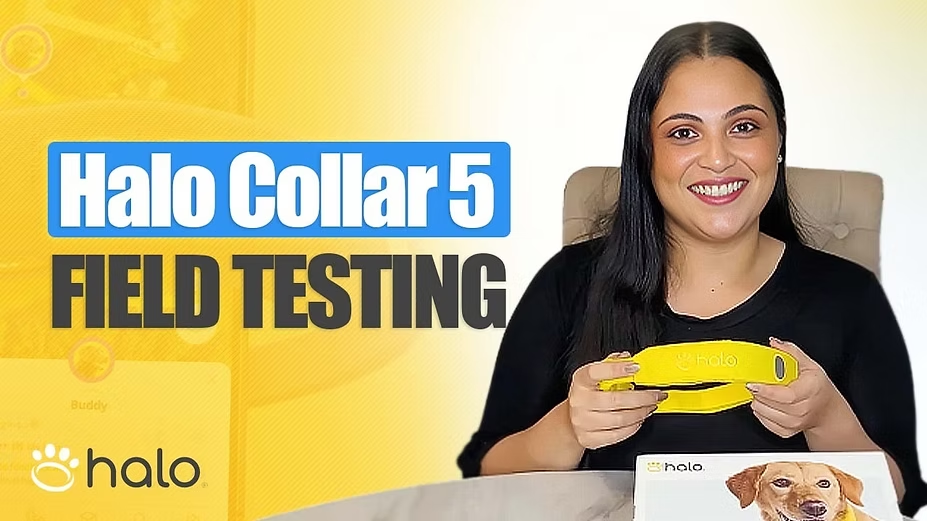
When I started using the Halo Collar 5, I noticed a different feel right away. During actual movement, especially when Maverick would suddenly switch directions like chasing something then immediately turning back, the tracking kept up without that delayed feeling I was used to. No lagging position, no weird trailing effect where the map shows him somewhere he already left.
Even in rough spots like thick foliage or areas where other collars usually lost their signal, the dog collar stayed way more stable than I expected. It didn’t just fall apart the moment conditions got difficult. Since the boundaries are stored on the device itself, it doesn’t rely completely on constant connection just to function properly, so even when signal dips a bit, it still reacts the way it should.
After a lot of testing in real situations, it started to feel less like a gimmick and more like something I could actually depend on when things get unpredictable. Other collars made me feel like I always had to double check everything. The Halo 5 felt more like it was quietly handling things in the background without me constantly worrying about whether it was keeping up or not.


Comments