Microplastics, PFAS, and More: How AquaTru Handles It All
Most people don’t spend much time thinking about the water they drink each day. It typically comes from the tap, may pass through a simple filter, and if the taste seems normal, that’s usually enough reassurance. When nothing appears off, it’s generally accepted without a second thought.
The problem is that many standard water filters can only do so much. Their primary function is to reduce chlorine, which is why filtered water often tastes smoother and less “chemical-like” than untreated tap water. While that change is noticeable, it only deals with a small portion of what might actually be in the water.
In reality, drinking water can contain a range of unseen contaminants. Microplastics tiny bits of plastic are now commonly found in water sources across the globe. Small traces of pharmaceuticals can also end up in water systems over time. PFAS, often called “forever chemicals,” are especially concerning because they don’t easily break down and can remain in the environment for years. Beyond these, there are many other microscopic substances that don’t affect how water looks, smells, or tastes.
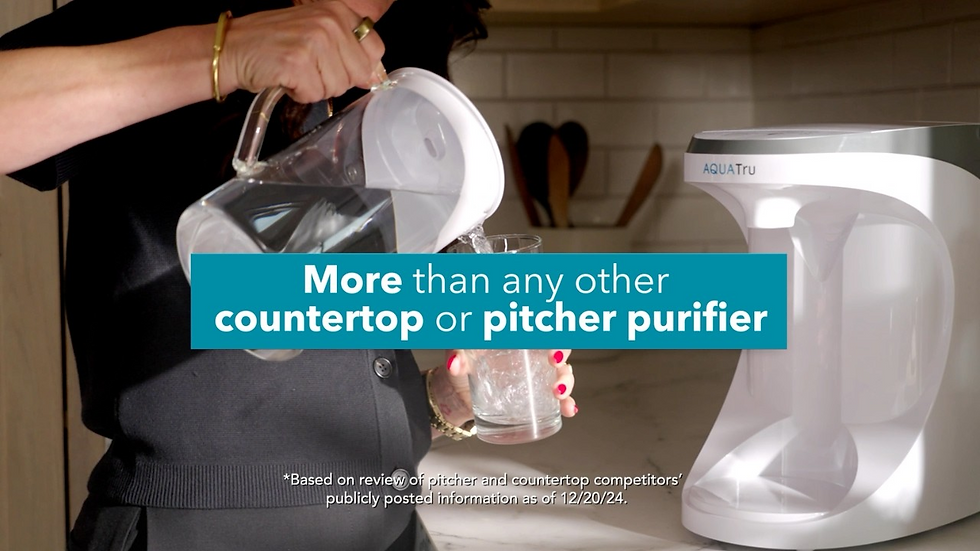
This is where systems like AquaTru take a more advanced and thorough approach. Instead of focusing mainly on improving taste, it uses reverse osmosis technology to achieve deeper purification. Water is pushed through an ultra-fine membrane that helps remove a wide range of dissolved contaminants.
The system also uses multiple filtration stages designed to reduce chlorine, lead, nitrates, PFAS, pharmaceuticals, and other impurities that basic filters may not effectively eliminate.
The key difference comes down to purpose. Traditional filters are mainly designed to improve the drinking experience. AquaTru, on the other hand, is built to remove as many contaminants as possible, including those that can’t be detected by taste or smell.
In the end, water doesn’t have to seem unpleasant to still contain substances that many people would rather avoid consuming.


Comments